PREVALENCE OF hATd

hATd is frequently undiagnosed, affecting almost 700,000 people in the US1,4,5

hATd is a hereditary autosomal dominant disorder that typically reduces functional antithrombin levels to 40% to 60% of normal2

Patients with hATd are about 20 times more likely to have a VTE compared with the general population2

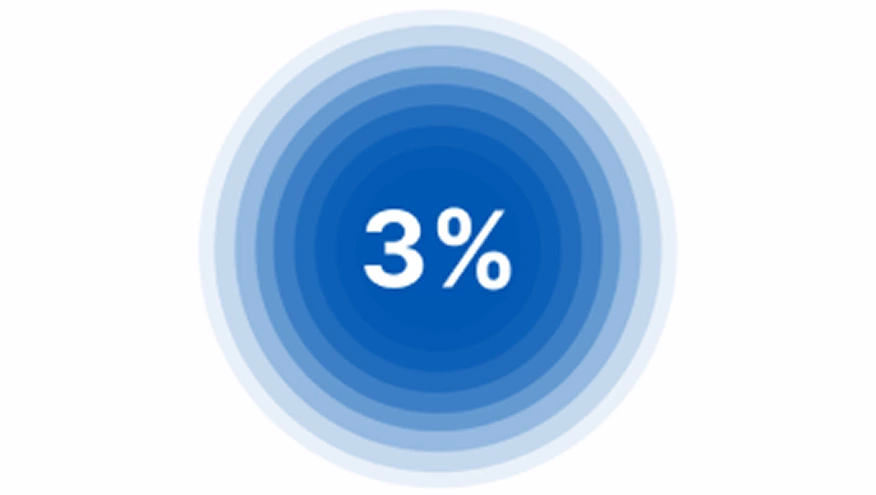
Of the estimated 547,596 patients hospitalized for VTE each year in the United States, up to 3% (~16,500) of these patients may have hATd3

A thrombophilia panel can help diagnose hereditary antithrombin deficiency or other inherited blood-clotting disorders, like factor V Leiden, or protein C or protein S deficiency.

hATd has 3 distinct features that set it apart from other thrombophilias

hATd presents the highest risk of thrombosis among inherited thrombophilias2

Can be prevented and treated by replacing the missing AT

Can be the reason why surgical patients do not have the expected response to their anticoagulation4*

*Heparin and enoxaparin.
†Patients heterozygous for factor V Leiden have approximately a 5-fold greater risk of venous thrombosis, while homozygotes have
approximately an 80-fold greater risk. Chart adapted from Franchini et al.

PREVALENCE OF hATd

hATD is frequently undiagnosed.
With an estimate incidence of 1/500 to 1/5000 it may affect almost 700,000 people in the US 1,5,6

85% of patients with hATd will have at least 1 thrombotic episode by age 507

Close to 70% of these patients will have an event before age 357

Approximately 50% of individuals with hATd will develop at least one clot in their lifetime (usually after adolescence)8

About 6 in 10 patients with hATd have recurrent blood clots9

AT III DEFICIENCY AND PREGNANCY

Pregnant women are up to 5x more likely to experience VTE compared to the general population10

  • AT levels decrease significantly from mid-second trimester to term in healthy women—and decrease even more steeply immediately after childbirth11
  • AT deficiency is associated with increased rates of maternal morbidity and mortality, as well as greater healthcare resource utilization (HCRU)12
hATd & Pregnancy

For pregnant women with hATd, the risk is even greater

Up to 70% who do not receive prophylaxis experience thromboembolic complications13,14

Despite recommendations, rates of AT level testing and treatment in prenatal and postnatal patients remain relatively low9

Pregnant women are at the highest risk for VTE around the time of delivery and in the first week of postpartum period15

*Rate using primary and secondary care data.
†Includes only VTE diagnoses supported by prescription or evidence of anticoagulant therapy within 90 days of the event or death within 30 days of the event.


NPP, non-pregnant period; PP, postpartum; Trim, trimester; VTE, venous thromboembolism; Wk, week.

THROMBATE III provides safe, convenient, and accurate dosing to prevent thromboembolism throughout pregnancy and postpartum

Case Study: Pregnancy with hATd and History of Pulmonary Embolism (PE)

  • Laura is 37 years old and is at ~5 weeks’ gestation
  • African American woman diagnosed with hATd
  • Asymptomatic until age 27, when she experienced a massive PE requiring lytic therapy
  • Younger sibling died of massive PE at age 18

Initial Evaluation and Management

  • Maintained on warfarin since PE
  • Transitioned to enoxaparin 40 mg daily
  • Baseline pregnancy-related coagulation studies were obtained and were normal
  • Monitoring planned every 8–10 weeks
  • Labs included antithrombin level, anti-Xa, factors VII and VIII, and fibrinogen

Pregnancy Complications and Management

  • At 8 weeks, Laura developed a DVT despite no evidence of increased coagulation system activation
  • Enoxaparin increased to 80 mg BID to offset the hypermetabolic state
  • Anti-Xa level was in good therapeutic range at 0.8 IU/mL*
  • Antithrombin level (51%) had not decreased significantly, so no antithrombin supplementation was given

Delivery Plan

  • Meetings with maternal-fetal medicine specialist to discuss delivery options given history
  • Elective induction at 38 weeks was recommended
  • Plan was to bring patient into hospital 2 days in advance to give THROMBATE III to raise antithrombin level to 100% and check decay rate every 12 hours
  • Pharmacy was alerted to ensure adequate stocks as patient would need THROMBATE III for several days
  • Labs showed no abnormal increase in coagulation studies compared with normal pregnancy

Delivery Outcome

  • Patient went into spontaneous labor 2 days before scheduled induction
  • Patient was informed that she was not a candidate for epidural because there was no time to discontinue enoxaparin before delivery
  • AT level on admission was 38%
  • Patient was given 3000 units of THROMBATE III and antithrombin level increased to 112%
  • Patient delivered vaginally without issue
  • Post-delivery antithrombin level was 71%

Postpartum Management

  • Patient was maintained on 2000 units of THROMBATE III daily for 2 days postpartum
  • Peak antithrombin levels at 1-hour post dose were 108% and 116%
  • Trough antithrombin levels drawn before next dose were 44% and 59%, respectively
  • Patient was given 3000 units of THROMBATE III on day of discharge and continued on enoxaparin 80 mg BID

Postpartum Outcome

  • No significant post-delivery complications were noted
  • Mother and baby did well
  • Patient was transitioned back to warfarin after 6 weeks

*Therapeutic range is >0.5 to <1.2 IU/mL.

BID, twice daily; DVT, deep vein thrombosis; hATd, hereditary antithrombin deficiency; PE, pulmonary embolism.

Hypothetical case profile is not intended to convey clinical diagnostic or therapeutic recommendations.

Learn more about THROMBATE III

Resources

Find resources for THROMBATE III

Learn More

VTE Risk

Explore how AT impacts VTE risk

Learn More

AT Levels & Heparin

Examine the role of AT levels in thrombosis

Learn More

THROMBATE III vs FFP

Discover the difference between THROMBATE III and FFP

Learn More

Have a question about THROMBATE III?

Get in touch with a representative today

Important Safety Information

THROMBATE III (antithrombin III [human]) is indicated in adult and pediatric patients with hereditary antithrombin deficiency for treatment and prevention of thromboembolism and for prevention of perioperative and peripartum thromboembolism.

Hypersensitivity reactions may occur. Should evidence of an acute hypersensitivity reaction be observed, promptly interrupt the infusion and begin appropriate treatment.

Because THROMBATE III is made from human blood, it may carry a risk of transmitting infectious agents, eg, viruses, the variant Creutzfeldt-Jakob disease (vCJD) agent, and, theoretically, the Creutzfeldt-Jakob disease (CJD) agent. There is also the possibility that unknown infectious agents may be present in the product.

Perform coagulation tests to avoid excessive or insufficient anticoagulation and monitor for bleeding or thrombosis. Measure functional plasma AT levels with amidolytic or clotting assays; do not use immunoassays.

In clinical studies, the most common adverse reactions (≥ 5% of patients) were dizziness, chest discomfort, nausea, dysgeusia, and pain (cramps).

The anticoagulant effect of heparin is enhanced by concurrent treatment with THROMBATE III in patients with hereditary AT deficiency. Thus, in order to avoid bleeding, the dosage of heparin (or low molecular weight heparin) may need to be reduced during treatment with THROMBATE III.

Please see full Prescribing Information for THROMBATE III..

References

  1. Patnaik MM, Moll S. Inherited antithrombin deficiency: a review. Haemophilia. 2008;14(6):1229-1239.
  2. Franchini M, Veneri D, Salvagno GL, Manzato F, Lippi G. Inherited thrombophilia. Crit Rev Clin Lab Sci. 2006;43(3):249-290.
  3. Centers for Disease Control and Prevention. Venous thromboembolism in adult hospitalizations – United States, 2007-2009. MMWR Morb Mortal Wkly Rep. 2012;61(22):401-404.
  4. Finley A, Greenberg C. Review article: heparin sensitivity and resistance: management during cardiopulmonary bypass. Anesth Analg. 2013;116(6):1210-1222.
  5. Tait RC, Walker ID, Perry DJ, et al. Prevalence of antithrombin deficiency in the healthy population. Br J Haematol. 1994;87(1):106-112.
  6. US Census Bureau, Population Division. US and world population clock. Accessed January 7, 2026. http://www.census.gov/popclock/.
  7. Kottke-Marchant K, Duncan A. Antithrombin deficiency: issues in laboratory diagnosis. Arch Pathol Lab Med. 2002;126(11):1326-1336.
  8. Hereditary antithrombin deficiency. National Institutes of Health website. https://rarediseases.info.nih.gov/diseases/6148/hereditary-antithrombin-deficiency. Updated December 2025. Accessed January 7, 2026.
  9. Pabinger I, Schneider B. Thrombotic risk in hereditary antithrombin III protein C, or protein S deficiency. Arteroscler Thromb Vasc Biol. 1996;16(6):742-748.
  10. Springel EH, Malhotra T. Thromboembolism in pregnancy. Updated June 6, 2025. Accessed January 7, 2026. https://emedicine.medscape.com/article/2056380-overview.
  11. James AH, Rhee E, Thames B, et al. Characterization of antithrombin levels in pregnancy. Thromb Res. 2014;134(3):648-651.
  12. Federspiel JJ, Rodriguez W, Spears J, et al. Antithrombin testing and treatment in pregnancy: their real-world relationship to clinical outcomes. Thromb Res. 2024;241:109070.
  13. Hellgren M, Tengborn L, Abildgaard U. Pregnancy in women with congenital antithrombin III deficiency: experience of treatment with heparin and antithrombin. Gynecol Obstet Invest. 1982;14:127-141.
  14. James AH, Konkle BA, Bauer KA. Prevention and treatment of venous thromboembolism in pregnancy and patients with hereditary antithrombin deficiency. Int J Womens Health. 2013;5:233-241
  15. Sultan AA, Tata LJ, Grainge MJ, West J. The incidence of first venous thromboembolism in and around pregnancy using linked primary and secondary care data: a population based cohort study from England and comparative meta-analysis. PLoS One. 2013;8(7):e70310.